
Ibraaz is pleased to announce the publication of our third book in the Visual Culture in the Middle East series, Future Imperfect: Contemporary Art Practices and Cultural Institutions in the Middle East.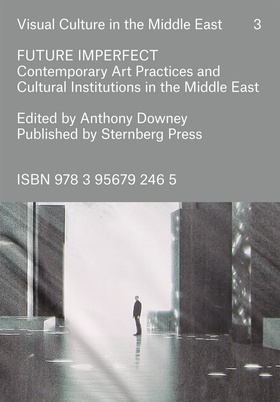
Buy the book via the Sternberg Press website and on Amazon.de.
Read the introduction, “Critical Propositions and Institutional Realities in the Middle East” by Anthony Downey, by clicking here.
#FutureImperfect critically examines the role played by cultural institutions in producing present-day and future contexts for the production, dissemination and reception of contemporary art in the Middle East and North Africa.
It offers critical contexts for a discussion that has become increasingly urgent in recent years – the role of culture in a time of conflict and globalization – and an in-depth critique of the historical state of cultural institutions in an age of political upheaval, social unrest, exuberant cultural activity, ascendant neoliberal forms of privatization, social activism, and regional uncertainty.
Organised around three key areas, Future Imperfect draws attention to the specific antagonisms that have affected cultural production across the region, both in historical and more recent post-revolutionary contexts, and offers an in-depth discussion of how cultural producers have developed alternative institutional models through their practices. How cultural institutions operate within the conditions of a global cultural economy, and alongside the often conflicting demands they place on cultural production in the region, is likewise an over-arching concern throughout this volume.
While the politics of contemporary cultural production and institutional practices in the Middle East can tell us a great deal about local and regional concerns, one of the cornerstone ambitions of this volume is to enquire into what they can also impart about the politics of global cultural production, including the multiple ways in which contemporary art practices are being reduced, willingly or otherwise, to the logic of global capital. What, in sum, is needed in terms of infrastructure for cultural production today, and how, crucially, can we speculatively propose new infrastructures and institutions in the context of present-day regional realities?
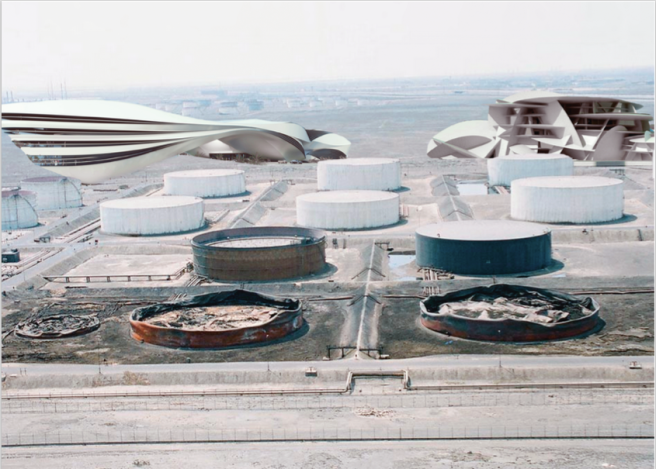
Future Imperfect contains essays, interviews, and projects from contributors including Monira Al Qadiri, Hoor Al-Qasimi, Anahi Alviso-Marino, AMBS Architects, Stephanie Bailey, Eray Çaylı, Rachel Dedman, Elizabeth Derderian, Anthony Downey, Karen Exell, Reema Salha Fadda, Wafa Gabsi, Hadia Gana, Adalet R. Garmiany, Baha Jubeh, Suhair Jubeh, Amal Khalaf, Kamel Lazaar, Jens Maier-Rothe, Guy Mannes-Abbott, Doreen Mende, Lea Morin, Jack Persekian, Rijin Sahakian, Gregory Sholette, Tom Snow, Ania Szremski, Christine Tohme, Toleen Touq, Williams Wells, Ala Younis and Yasmine Zidane.
The publication is accompanied by a collection of special projects from Leila Al-Shami, Wided Rihana Khadraoui, Lois Stonock, Nile Sunset Annex, Alia Rayyan and Hussam al-Saray. Click here to view the online projects commissioned for Future Imperfect.
Other titles in the Visual Culture in the Middle East series, edited by Anthony Downey, include Dissonant Archives: Contemporary Visual Culture and Contested Narratives in the Middle East (2015); and Uncommon Grounds: New Media and Critical Practices in North Africa and the Middle East (2014).
The production of this book was accomplished through the generous support of the Kamel Lazaar Foundation.
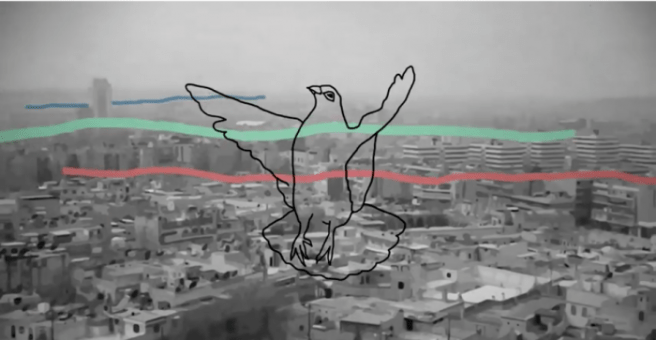
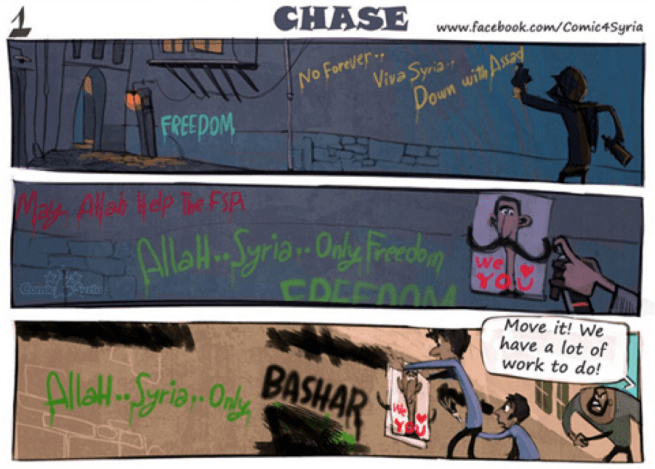 In 2011, a small piece of graffiti demanding the fall of the Syrian regime instigated a vicious crackdown by the government upon its young perpetrators. This graffiti was arguably one of the catalysts that led to the Syrian Revolution, which has since deteriorated into the now four-year-long civil war. It is somewhat fitting then that today, the cultural and artistic responses in the war-torn country have been described as the only positive development of the conflict. Despite the widespread devastation – which has seen over 230,000 people killed, more than 4 million fleeing as refugees, and almost 8 million internally displaced[1] – Syrians have been responding to and documenting their crisis creatively, taking advantage of greater freedom of expression of an essentially collapsed state (compared to the fierce censorship that reigned during Assad’s unchallenged rule). That is not to say that artists are free from the repercussions of their work – many artists have been forced out of work, threatened, beaten, imprisoned, forced to leave the country or, in some cases, killed[2]. In spite of the danger, and beyond the sounds of shelling and bombardments that try to drown them out, many artists both inside and outside the country continue to battle against tyranny to make their voices, and those of the Syrian people, heard.
 fanoffanoon.com